Published by Paul Ivinskas
Sunday, October 25, 2026

Everything Utah, every day.

Help Utahns understand their communities and hold government accountable. Our mission →

Wildlife & plants · Trees

Fremont cottonwood

A broad-crowned river tree whose new generations depend on the right combination of flowing water, exposed sediment, and moisture.

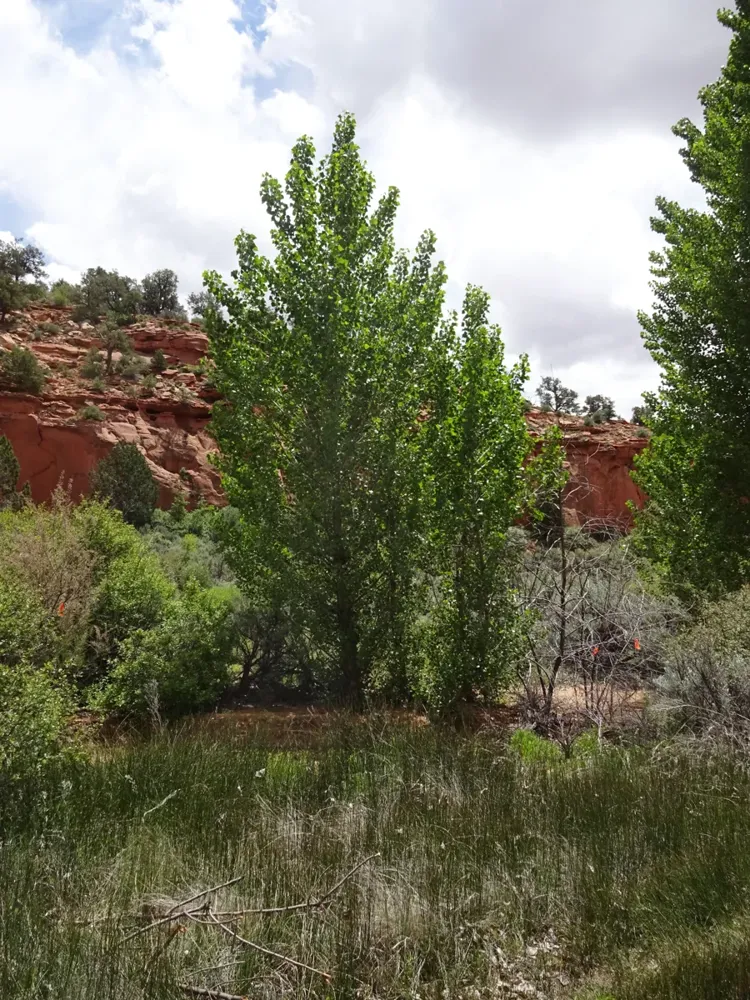
A green Fremont cottonwood tree beside red sandstone
File photo: A green Fremont cottonwood tree beside red sandstone — Johnson Lakes Canyon, Kane County, May 2016 · Cropped to fit. Photo: Andrey Zharkikh from Salt Lake City, USA · CC BY 2.0 · Wikimedia Commons

Fremont cottonwood can be a striking green landmark in Utah's dry country. Mature trees have broad crowns, thick furrowed bark, and roughly triangular leaves with coarse rounded teeth. Their long, flattened leaf stalks let the leaves move in the wind. Autumn foliage is usually yellow. Cottonwoods also hybridize, so leaf shape alone is not a complete identification key; compare several leaves and the setting.

Its relationship with water is more specific than simply growing beside a river. The tiny, cotton-bearing seeds are short-lived and need suitable moist, exposed ground for establishment. Receding spring floods can leave fresh sand and silt just when seeds are available. A stand of mature trees may persist while that opportunity for seedlings becomes uncommon. This helps explain why conserving a cottonwood woodland involves the river's flow and floodplain as well as the standing trunks. In Utah, Fremont cottonwood is chiefly a lower-elevation tree, generally below about 6,000 feet.

Cottonwood shade, branches, and streamside cover contribute habitat in landscapes where large broadleaf trees are otherwise scarce. Willows and other moisture-loving plants often grow nearby. Stay on established approaches, leave saplings undisturbed on wet bars, and avoid trampling young trees for a photograph. A line of cottonwoods indicates access to water in the landscape; it does not guarantee a flowing stream, safe drinking water, or public access.

How to recognize it

Broad triangular toothed leaves, spreading crown, deeply furrowed mature bark; other cottonwoods and hybrids complicate identification.
Seeing it

Protect seedlings and soft banks; do not use tree presence as a water-safety or access indicator.

Related profiles

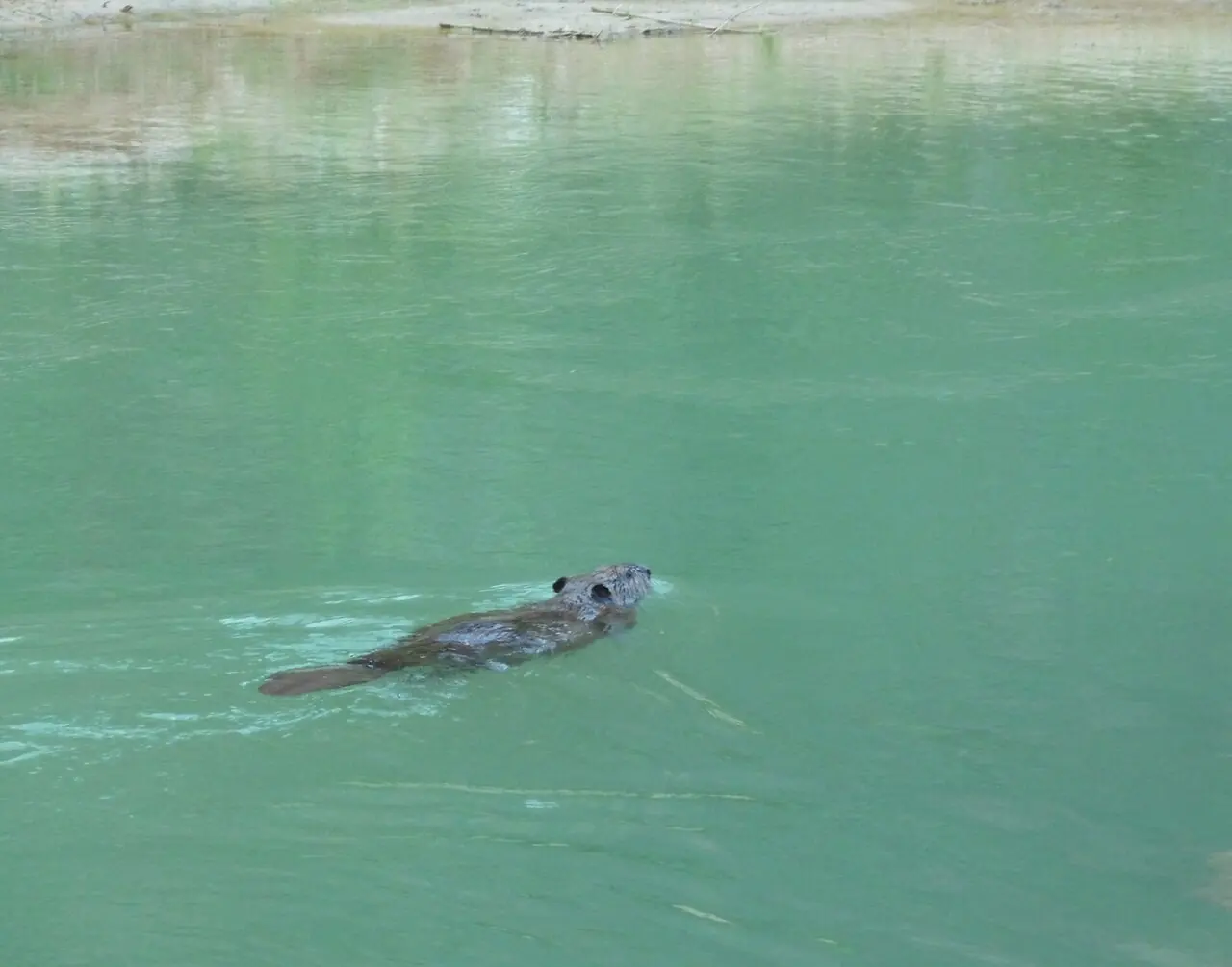
An American beaver swimming in green water
File photo: American beaver in Zion National Park, July 2012. Photo: Zion National Park / National Park Service · Public domain · Wikimedia Commons
Mammals

American beaver

A paddle-tailed rodent whose feeding and construction can transform a stream into a complex wetland.

Castor canadensis

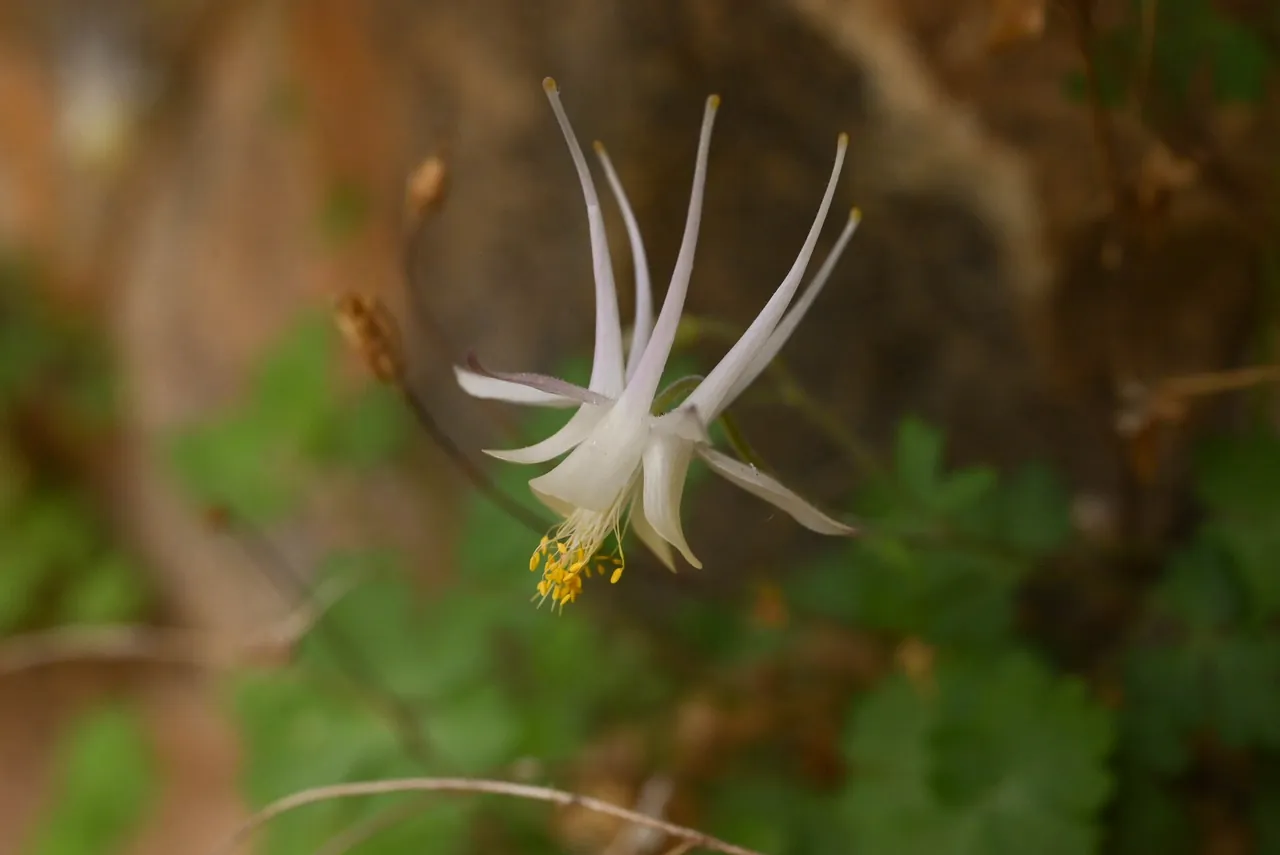
Alcove columbine flower with long pale spurs, seen from the side
File photo: alcove columbine flower with long pale spurs, seen from the side. Photo: Anders Hastings · CC BY 4.0 · Wikimedia Commons
Wildflowers

Alcove columbine

A small-flowered columbine of seeps and hanging gardens, where groundwater creates a cool refuge within the desert.

Aquilegia micrantha

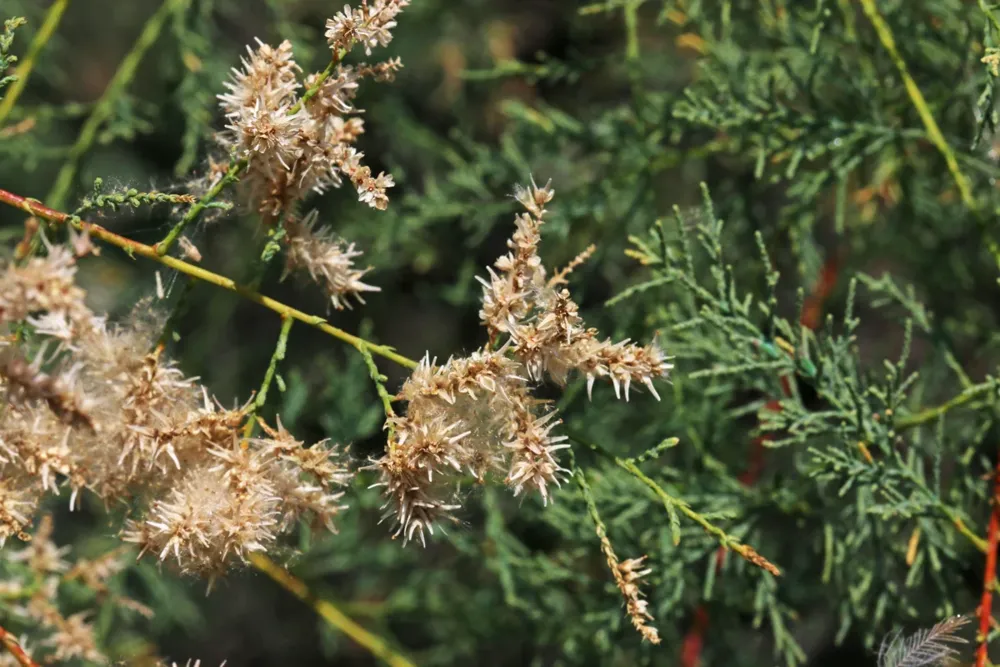
Pale pink tamarisk flowers and slender green foliage
File photo: Pale pink tamarisk flowers and slender green foliage — Jordan River, August 2015. Photo: Andrey Zharkikh from Salt Lake City, USA · CC BY 2.0 · Wikimedia Commons
Shrubs

Tamarisk

A non-native, water-loving shrub along southwestern rivers, and a target of restoration work.

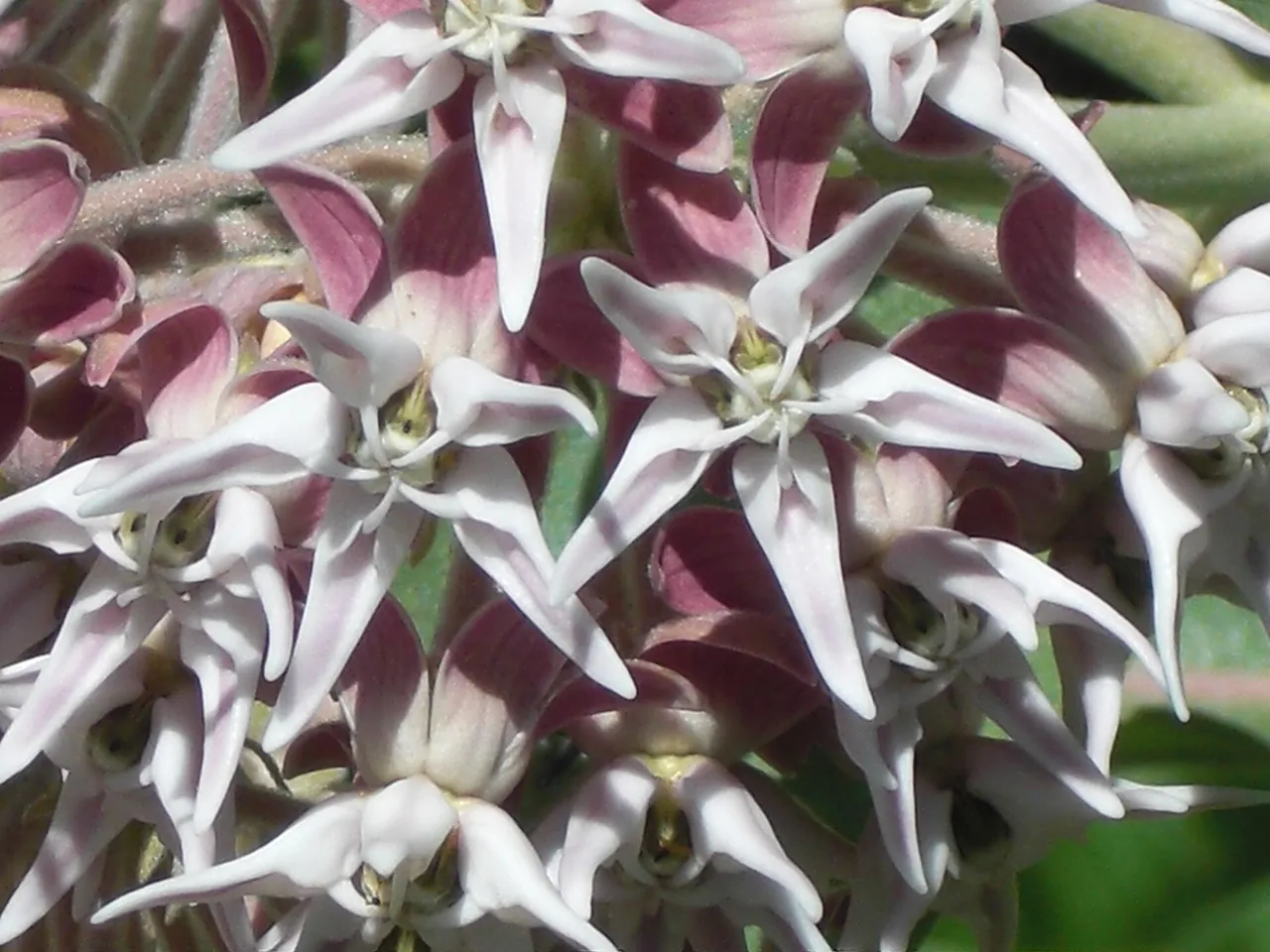
Showy milkweed flowers on the slopes of Red Butte
File photo: showy milkweed flowers on the slopes of Red Butte. Photo: Andrey Zharkikh · CC BY 2.0 · Wikimedia Commons
Wildflowers

Showy milkweed

A broad-leaved native perennial whose clustered flowers support pollinators and whose leaves can host monarch caterpillars.

Asclepias speciosa

Saved on this device. Statewide news and alerts remain available.