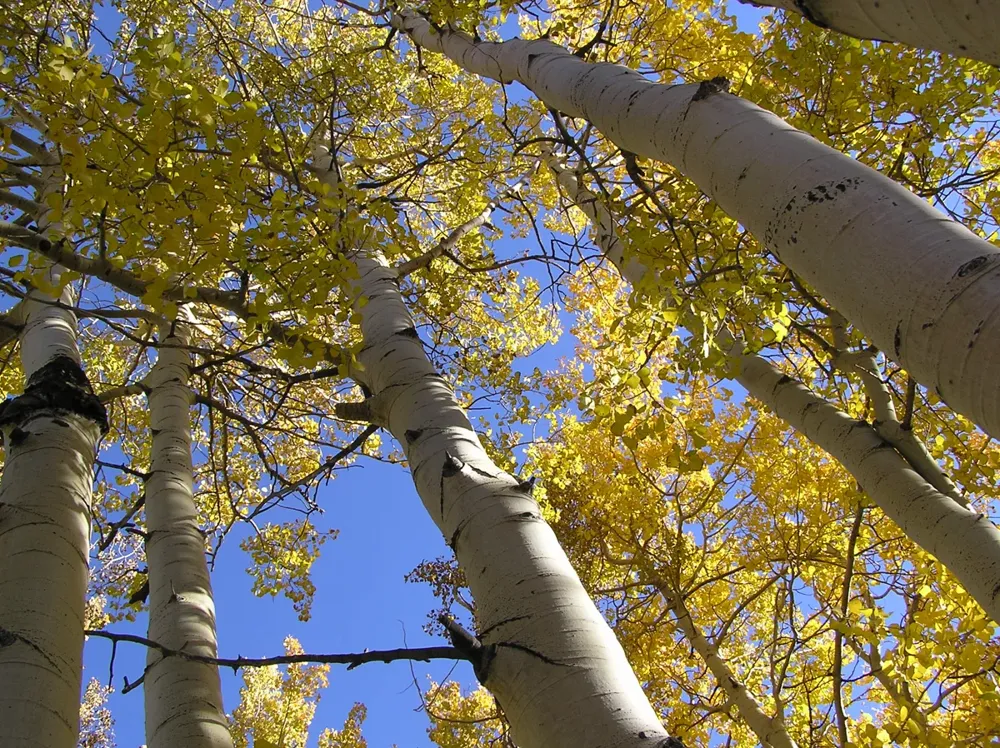
An aspen grove moves even in a light breeze. The nearly round leaves hang from flattened stalks that let them flutter, making the canopy shimmer and rustle. Smooth, pale bark is another useful clue, although older trunks can become dark and furrowed near their bases. The leaves turn yellow to orange before falling. These visible features are more dependable than a promised autumn date: elevation, weather, and the condition of a particular grove all influence the display. Utah's state tree is most at home in cool, moist mountain settings.
What looks like a stand of separate trees may be a connected clone. Aspen can send up new stems from an established root system, especially after disturbance opens the canopy. The individual trunks and the larger genetic individual therefore have different life histories. Root sprouting does not mean every neighboring aspen belongs to one clone, and a visitor cannot establish clone boundaries simply by comparing bark or fall color. Aspen needs abundant light; its response to disturbance is part of the story of a grove, rather than proof that every stand needs the same treatment.
Aspen forests offer feeding, resting, and breeding habitat to birds and mammals. Young shoots are browse for deer and elk, but repeated heavy browsing can prevent replacement stems from growing tall. Enjoy both the canopy and its understory from established routes, and leave bark uncarved and young shoots intact.