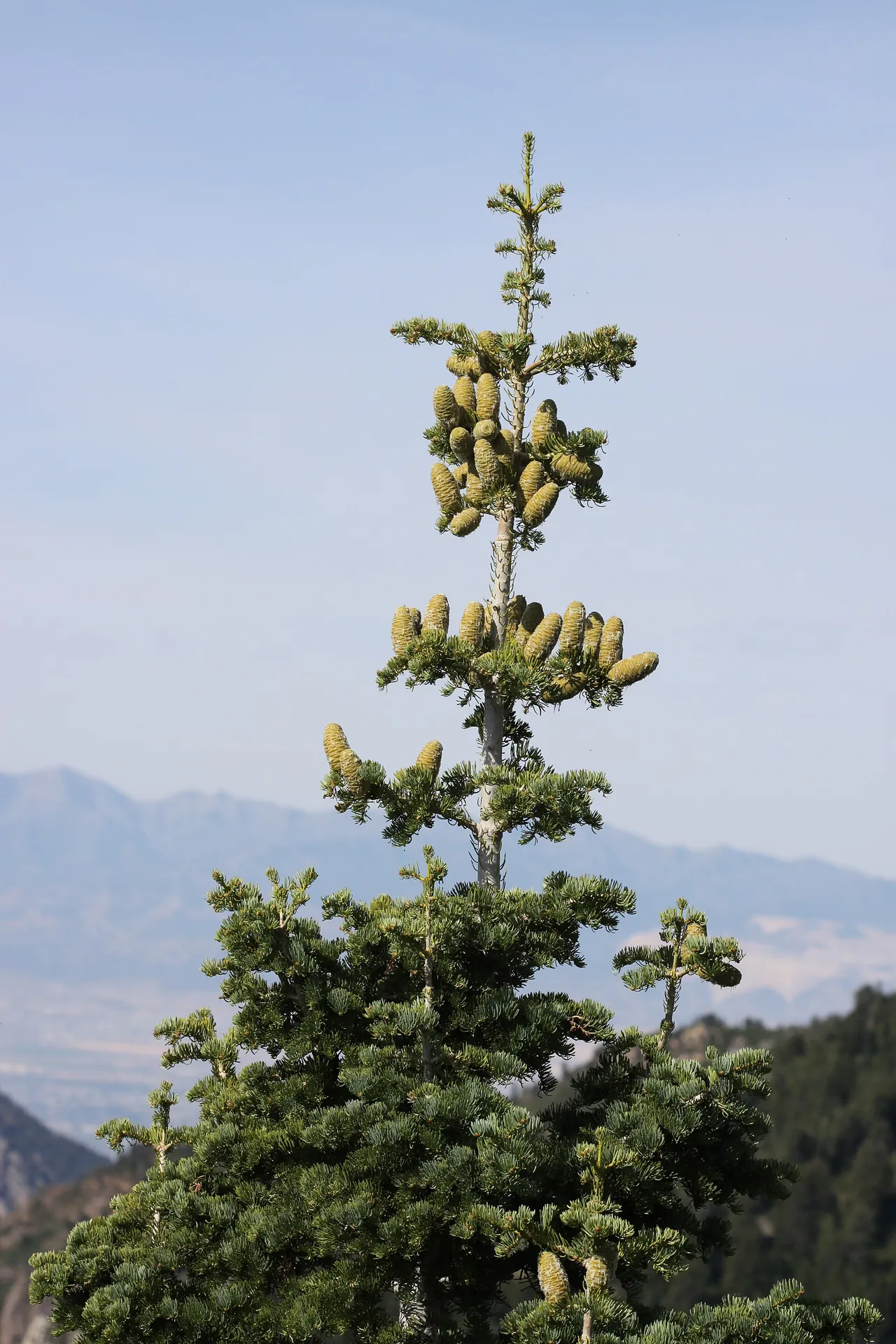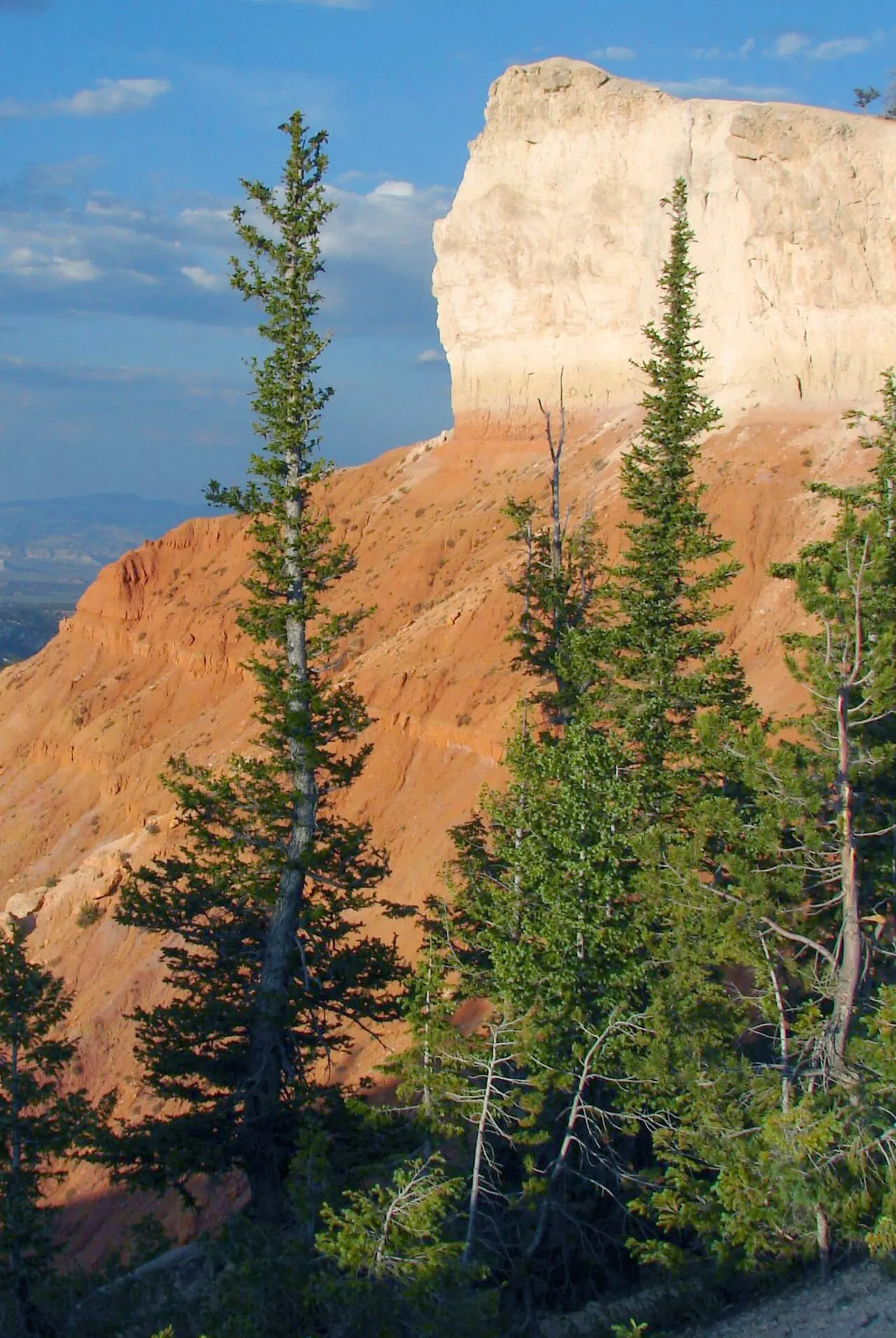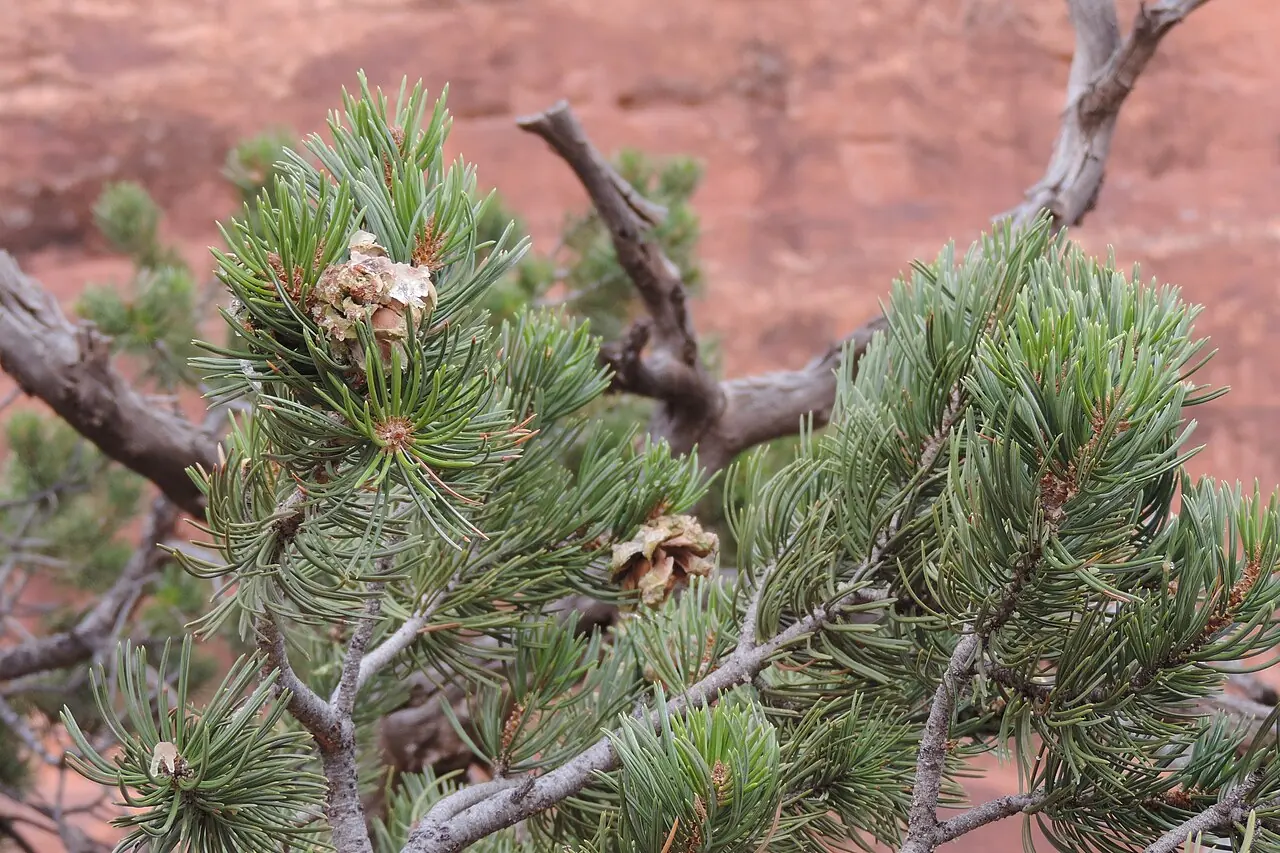
File photo: Pinyon pine needles and cones in Arches National Park (2016-09-07 23:38:35). Photo: Krzysztof Ziarnek, Kenraiz · CC BY-SA 4.0 · Wikimedia Commons
Everything Utah, every day.
Help Utahns understand their communities and hold government accountable. Our mission →
A slow-growing native pine of harsh mountain sites, with five needles in each bundle.
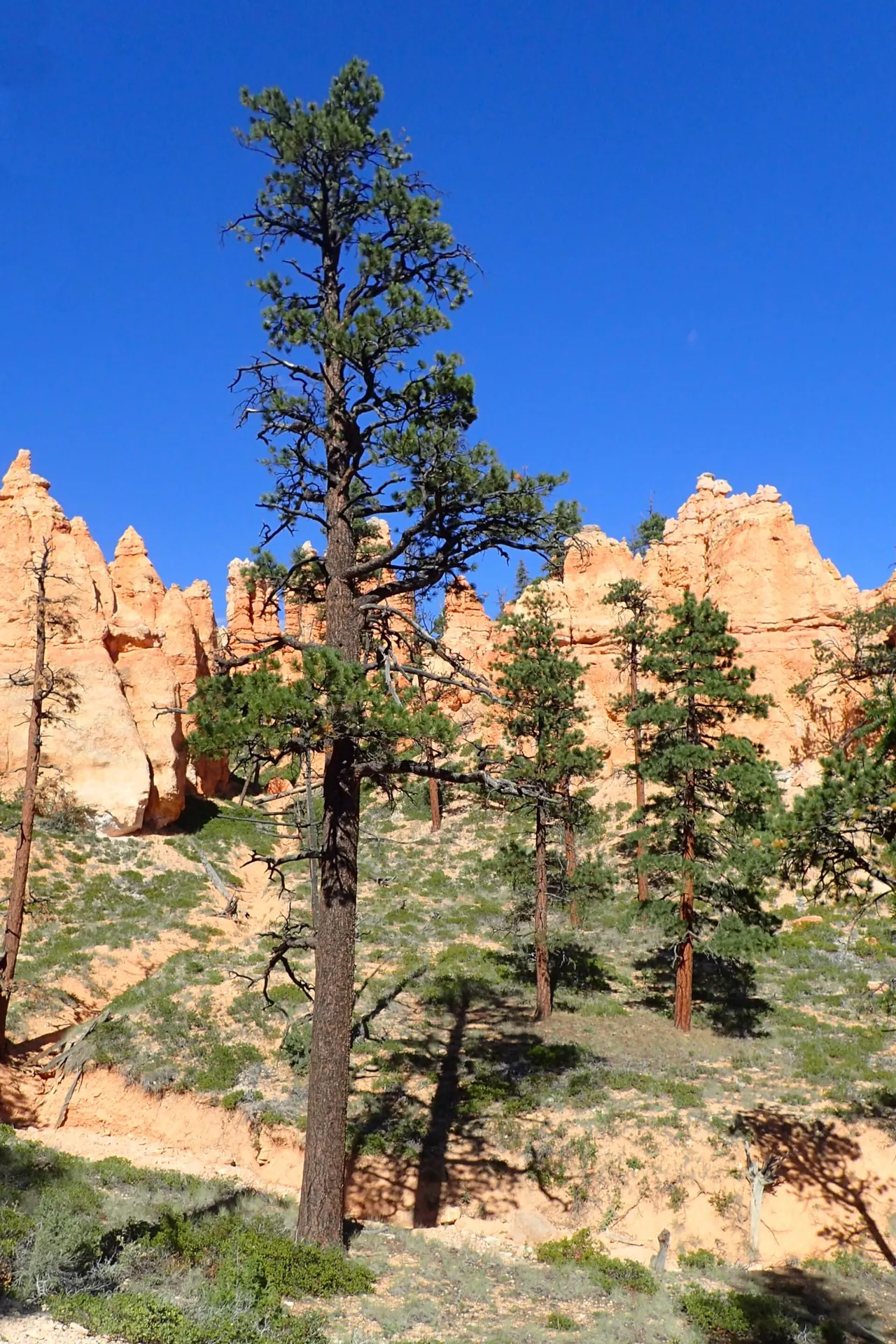
Limber pine grows at higher elevations in Utah and the interior West. Utah State University describes it as a long-lived, slow-growing tree that can occupy dry, difficult sites and tolerates little shade. Its flexible twigs help explain its common name.
Look for bundles of five dark-green needles, rather than the paired needles of two-needle pinyon. The woody cones have thick scales without pointed tips and contain large, wingless seeds. Needle bundles and cones are more useful identification clues than a tree’s outline alone.
Those heavy seeds are poorly suited to wind. Clark’s nutcrackers harvest them and bury them as stored food, and seeds left in the ground can sprout. The Forest Service’s review notes that limber pine regrowth on burned ground largely comes from nutcracker caches. It also reports that nutcrackers cached an estimated 12,140 seeds per acre in one year in a burned area in northern Utah, which shows how many seeds the birds bury but not how many seedlings result. Seedlings from a single cache can grow together as a multi-stemmed clump. Not every seed survives, and other animals may spread seeds elsewhere.
Look at accessible foliage without breaking branches or collecting cones. Stay on durable surfaces around mountain trees and compare several features before naming a tree.
A native mountain conifer whose hanging cones have distinctive three-pointed bracts.