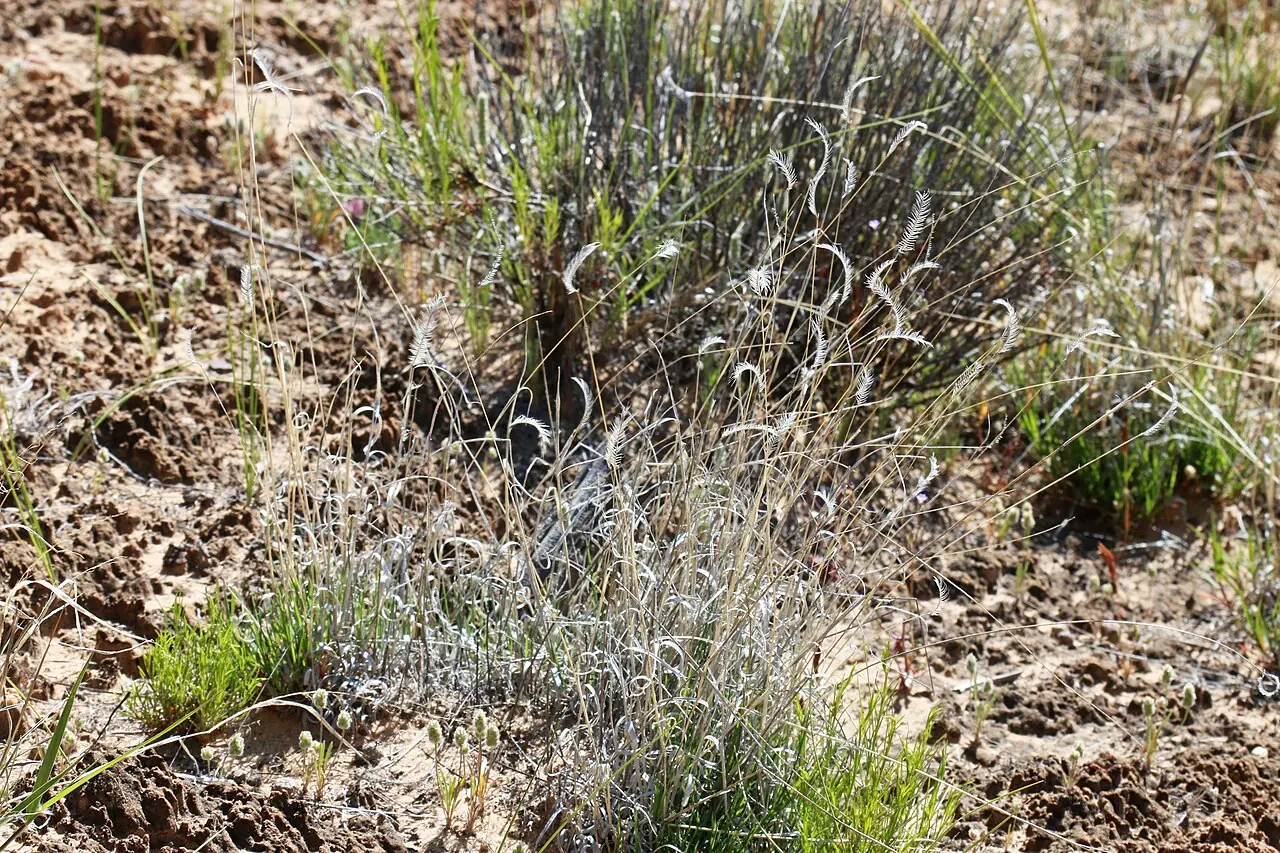
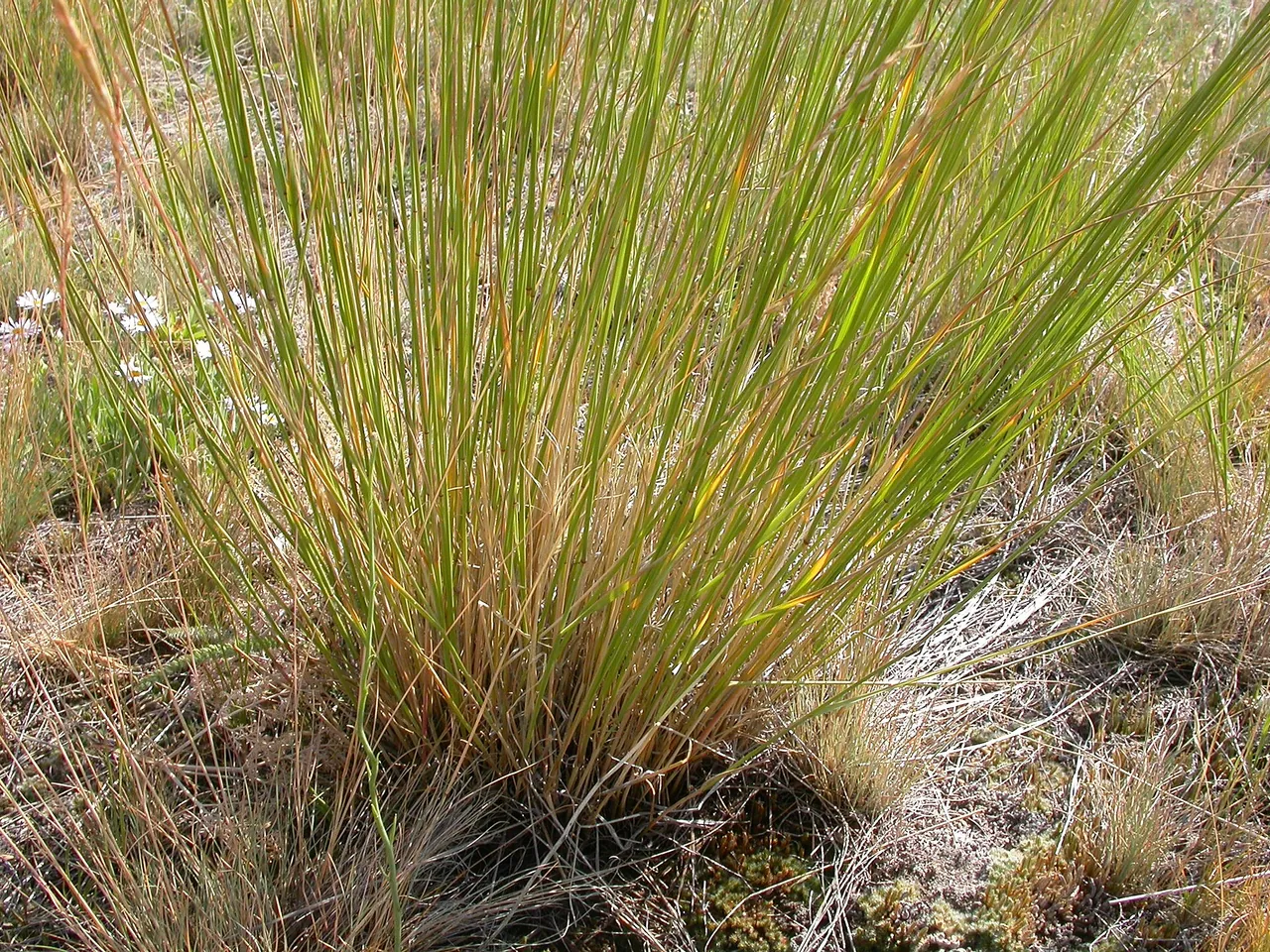
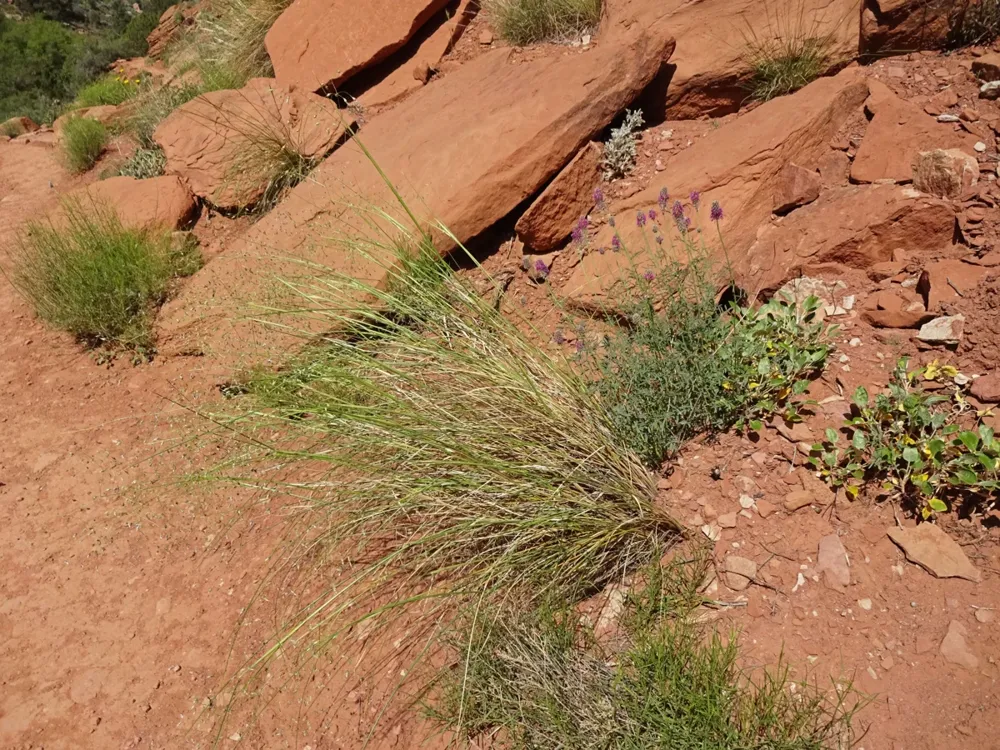
Blue grama's most memorable feature sits above its short leaves: a curved, one-sided flowering spike that resembles a tiny comb or eyelash. Several such spikes may stand above a patch, making the plant easier to recognize in flower or seed than when only foliage is visible. The leaves are narrow, with flowering stems extending above the low foliage. Grass identification still benefits from more than one feature, and a low-growing patch without mature seedheads should not be named solely by its height or color.
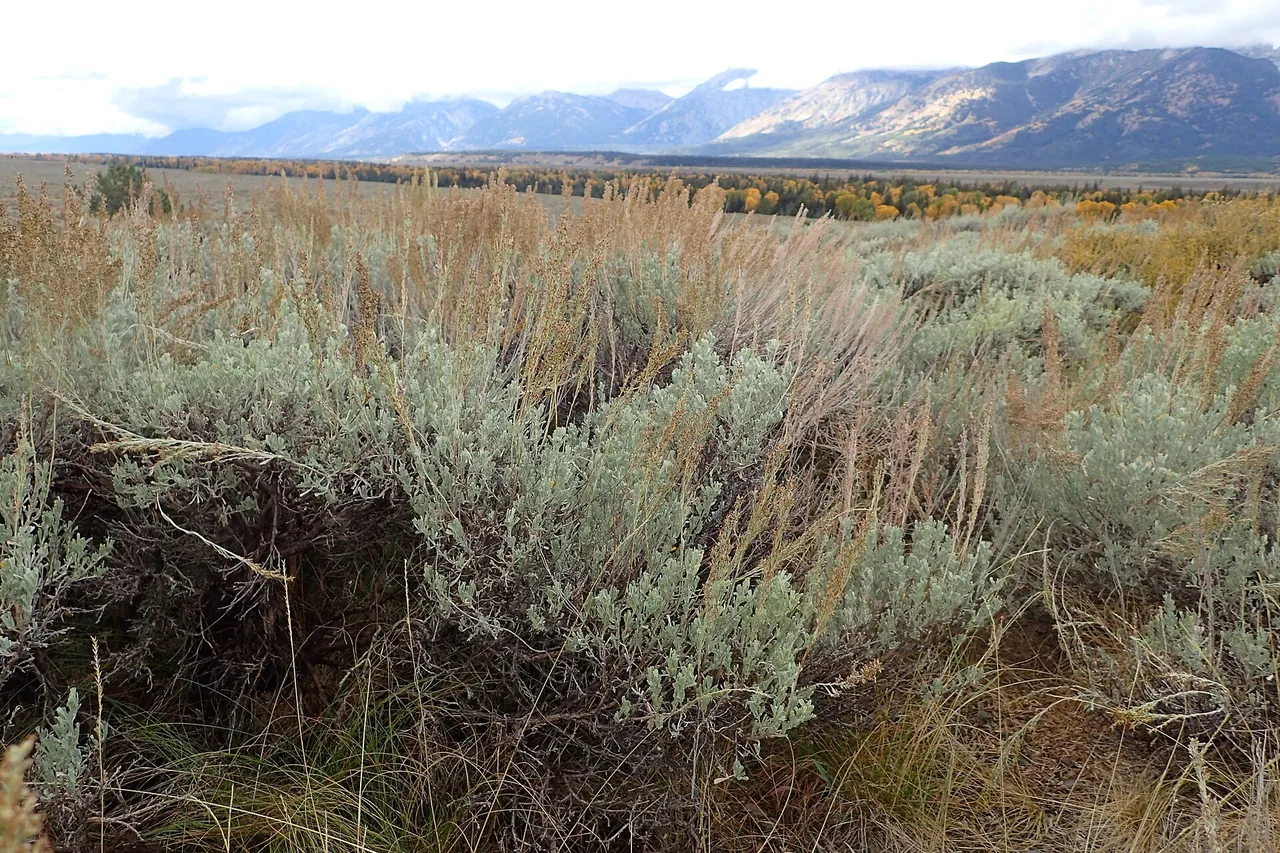
Blue grama is a warm-season perennial. In Utah it generally starts active growth later than cool-season grasses such as Indian ricegrass, with USU describing growth beginning in May or June and flowering in July or August. Those are broad seasonal patterns, not dates guaranteed at every site. Summer precipitation is especially important. The species occurs on plains, mesas, foothills, and open woodland, but it is not suited to persistently wet, poorly drained ground.
Its growth form can range from discrete bunches to a more connected open sod as new shoots develop. Arches describes blue grama alongside galleta among the park's native sod-forming grasses. This flexibility helps reconcile photographs showing either small tufts or low patches. Blue grama provides forage and helps reduce soil erosion, but drought tolerance is not immunity to disturbance. Keep feet and wheels on established routes, and leave the distinctive seedheads for the next visitor to notice.
Examples from the sources, not a complete range or a sighting guide.